%20Math_CP_Solution%202026_54.9mm-250x250h.jpeg "DSE Mathematics - Compulsory Part Related Past Papers Suggested Solution")
%20Phy%20Solution%202026_54.9mm-250x250h.jpeg "DSE Physics Related Past Papers Suggested Solution")
%20Econ%20Solution%202026_30mm-250x250h.jpeg "文憑試 經濟 相關試題參考答案")
%20Bio%20Solution%202026_34.7mm-250x250h.jpeg "DSE Biology Related Past Papers Suggested Solution")






The Hong Kong Diploma of Secondary Education Examination (HKDSE) Chemistry curriculum covers fundamental chemistry concepts such as atomic structure, chemical bonding, chemical reactions, chemical equilibrium, acids and salts, organic chemistry, electrochemistry, and thermochemistry. It also emphasizes developing students’ skills in analysis, reasoning, experimental design, and problem-solving. Chemistry not only provides a foundation for pursuing university studies in medicine, pharmacy, engineering, environmental science, and related fields but is also closely linked to everyday life and industrial applications.
The HKDSE Chemistry examination consists of two written papers. Paper 1 is compulsory, accounting for 60% of the total score, and includes multiple-choice and structured questions covering the entire core syllabus, with an exam duration of 2 hours and 30 minutes. Paper 2 is elective, accounting for 40% of the total score, where candidates choose two questions from several options. This paper mainly assesses students’ understanding and integrated application of extended topics such as organic chemistry, analytical chemistry, and industrial processes, with a time allowance of 1 hour. From 2024 onwards, the School-based Assessment (SBA) has been cancelled; all experimental components are assessed through written exams.
For revision, students should first build a solid foundation by understanding the logical relationships between chemical concepts, especially challenging topics such as chemical equilibrium, electrolytes and redox reactions, and inferring organic compound structures. It is recommended to create "concept maps" and "formula sheets" to help organize complex content and calculation methods. Additionally, practicing a large volume of past exam papers and mock tests is essential to improve problem-solving speed and accuracy. For experimental questions, students should be familiar with common procedures, observation recording, and conclusion writing, such as titration, gas measurement, and purity testing. Taking notes, regularly self-testing, and discussing with classmates can deepen understanding and help identify weaknesses.

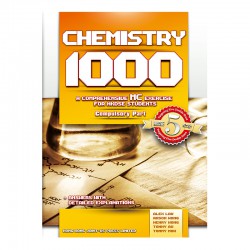
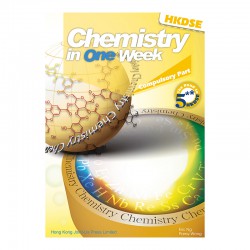
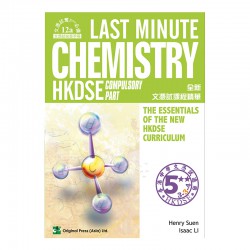
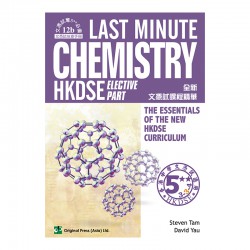

_chem-250x250.jpg "最後一分鐘 DSE 化學 - 必修部分")
%20CHEM%20Solution%202026_47.9mm-250x250h.jpeg "DSE Chemistry Related Past Papers Suggested Solution")
%20Chem%20Solution%202026_40.2mm-250x250h.jpeg "文憑試 化學 相關試題參考答案")